

An Expert Interview with Hailey Worke, Director of Shared Services at Blue Ox Heating & Air
Most conversations about home theater design focus on display technology, acoustics, and seating. The HVAC system behind the walls almost never comes up. We sat down with Hailey Worke, Director of Shared Services at Blue Ox Heating & Air, a top-rated HVAC company serving Twin Cities and Rochester homeowners with 5,400+ five-star Google reviews and over 43 years serving Minnesota homeowners, to talk about what climate control means for a high-performance display environment and what homeowners and integrators keep getting wrong.
AWALL: Large-format MicroLED displays generate significant heat. How does that change the HVAC conversation in a dedicated home theater or media room?
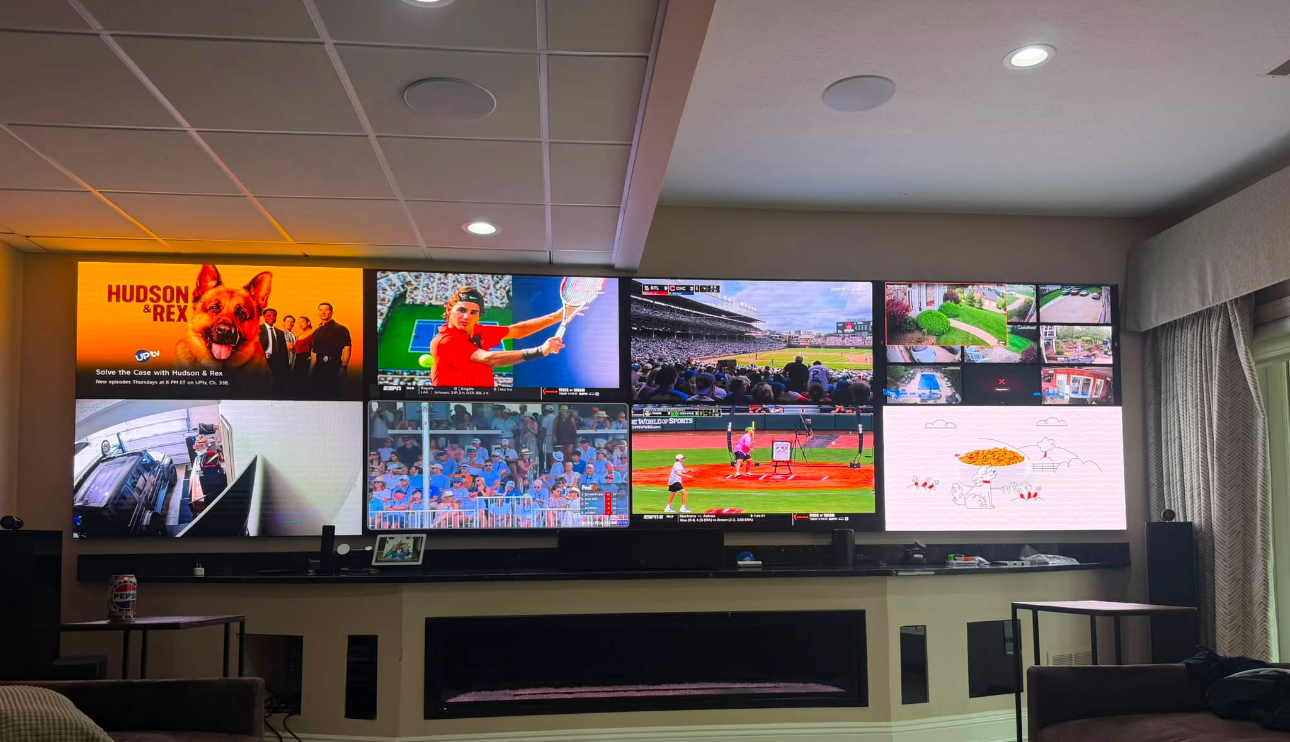
Hailey Worke: More than most people expect. A 135-inch MicroLED display running for three or four hours creates a lot of heat. In a room sealed tight for acoustics, that heat gets trapped. We recommend treating any dedicated media room as its own HVAC zone. A mini-split or a dedicated supply and return can regulate that space on its own. All of that has to happen before the room is finished, though. Once the walls are closed, giving that room its own climate control means opening them back up.
AWALL: What environmental conditions, including temperature and humidity, actually matter for display longevity and picture performance?
Hailey: Minnesota homeowners deal with two extremes: very dry air in winter, humid summers. Both matter for electronics. Dry air creates static and can stress sensitive components over time. High humidity, especially in a basement media room, brings condensation risk that can affect the display and the cabling behind it. The sweet spot for most high-end home electronics is 35 to 55 percent relative humidity and a steady temperature, ideally between 68 and 75 degrees. A whole-home humidifier paired with proper cooling gets you there without constant manual adjustments, and it keeps the equipment safe from both extremes.
AWALL: When should a homeowner or AV integrator bring an HVAC professional into a home theater project, and what happens when they wait too long?
Hailey: The earlier the better, because every stage that gets built adds a constraint we have to work around. If we are in from the design phase, we can size the system correctly, run the supply and return so they stay clear of the acoustics and the sightlines, and set the room up with its own climate control from the start. After the equipment is installed, we are working backward. I have seen finished media rooms where the ductwork got overlooked entirely, and the only way to fix it was cutting into a finished ceiling. That is expensive and it is avoidable.
AWALL: What questions should a homeowner ask their HVAC contractor before a high-end media room build?
Hailey: The big one is whether the room can have its own climate control, separate from the rest of the house. If the contractor says they will just extend the existing system, that is your cue to push back. I would also ask how they plan to handle humidity in both summer and winter, because generic HVAC does not always account for how far Minnesota swings between the two. And ask straight out whether they have done dedicated entertainment spaces before. The airflow, the noise thresholds, the equipment load are all different from what a bedroom or living room needs. Blue Ox works with residential and light commercial clients across the Twin Cities and Rochester, and a high-performance room is exactly the kind of job where having done it before makes a difference.
AWALL: For homeowners who already have a finished media room but are noticing comfort issues like temperature fluctuations, stuffiness, or fan noise from the equipment, where do they start?
Hailey: Start with a load calculation and a real look at whether the room has its own climate control or just got wired into the main system as an afterthought. Stuffiness and temperature drift usually mean the return airflow is inadequate: the room is getting conditioned air but not moving it. Fan noise from the electronics is often the gear working harder than it should because the room is too warm. A Blue Ox technician can assess the space, pin down whether it is airflow, humidity, or the way the room is controlled, and lay out your options with no pressure.
Blue Ox Heating & Air provides HVAC repair, replacement, indoor air quality, and duct cleaning services for homeowners across the Twin Cities and Rochester. Learn more at goblueox.com.


Leave a comment
This site is protected by hCaptcha and the hCaptcha Privacy Policy and Terms of Service apply.